Making Space: Gardens, Projects, and Building Something New
- shaynewh91
- Jun 21
- 8 min read

The past couple of weeks have been all about cleaning, organizing, and making space. Not just physical space, either. It seems that every project around here has come with a little bit of reflection, a little bit of letting go, and a little bit of dreaming about what comes next.
Sometimes, making room in our homes also makes room in our minds and hearts.
Listening to the Garden

I finally tackled the weeding in the Outer Banks garden.
This garden has slowly become one of my favorite spaces on the property. Every year I learn something new about it. This season, I paid close attention to when things bloom and what colors appear throughout the year. There is something incredibly satisfying about watching a garden move through the seasons, changing its palette from one month to the next.
Spring starts with soft yellows and whites, then the purples and pinks begin to emerge. By summer, the garden feels full and alive with color, and by autumn the warmer tones begin to take over. It feels less like maintaining a garden and more like witnessing a living painting that changes with the seasons.
My goal for the Outer Banks has always been to create a space that is as self-sustaining as possible. I don't have irrigation out there. If I want to water that garden, I have to haul a hose over the fence and connect multiple sections together just to reach it. Because of that, every plant has to earn its place.
I want blooms from early spring as late into fall—and maybe even winter—as I can manage. I want a variety of heights, textures, and colors. Most importantly, I want it to be a place that supports pollinators.
So far, I've realized that May is my weak spot. There's a noticeable lull in blooms that month, and I am already making notes for next year. Heat-tolerant, drought-tolerant plants that attract pollinators are always welcome suggestions, especially if they're native species or edible plants.
Gardens are never really finished. They're ongoing conversations between the gardener and the land. What works one year may struggle the next, and every season brings new lessons about balance, resilience, and adaptation. The goal isn't perfection—it's creating a space that can thrive with a little less intervention and a little more harmony over time.
Unpacking More Than Boxes

Another ongoing project around here has been much larger than a simple garage clean out.
My partner's dad is selling his house and moving out of state, and my partner was asked to come collect his belongings.
That request set off a chain reaction.
To make room for everything coming from his dad's property, he had to clean and reorganize his own spaces—both his garage at home and the barn he rents up the road, which has essentially become his storage facility.
My partner refers to himself as a "Collector of Projects Yet To Be."
Other people might call him a pack rat.
I suppose both descriptions are true.
His work spaces are full of tools, car parts, and materials that most people would overlook. To someone unfamiliar with this kind of collecting, it might simply look like clutter or chaos.
But for those of us who know people like this, we see something else.
We see creativity.
We see possibilities.
We see someone who remembers where every odd piece came from and can tell you exactly what it could become.
We also see someone who stores memories inside objects.
Sometimes those objects get tucked into corners and forgotten beneath other things for years or even decades.
Cleaning these spaces has been about much more than sorting tools and organizing parts.
It has been an unveiling.
As the piles became smaller and the shelves more organized, something else started happening too.
My partner began unpacking things emotionally.
He has been through a lot over his lifetime, much of which he simply carries quietly. He has always been the kind of person who puts everyone else before himself and keeps moving forward no matter how heavy things get.
Over these past few weeks, I have watched him let go of things he has been carrying since childhood.
I have watched him finish projects that he started more than twenty years ago.
I have watched him move from simply going through the motions of life to rediscovering his sense of direction.
It feels a little like watching someone find their compass again after being lost in the woods for a long time.
A Dream Made of Cast Iron

I think he was rewarded for all of his efforts.
For years, his dream has been to own a lathe.
With a lathe, he can build and repair nearly anything his heart desires.
One of our friends invited him to another friend's house who was also preparing for a move. This gentleman was looking for someone to take a thirteen-foot lathe that had been used to help build the railway system through our valley back in 1911.
A piece of local history.
And it still works!
It's worn, of course. A machine over a century old is bound to show its age. But everything functions beautifully.
The lathe now has a new home.
With it, my partner's garage is finally becoming the safe, organized, and functional workspace he's always wanted.
The first project on the list?
Finishing a 1966 Chevy Camper Special rebuild for one of his customers. After that? I guess we will find out as time goes on.
Sometimes the right things arrive exactly when we're finally ready for them.
Little Seedlings, Big Wins
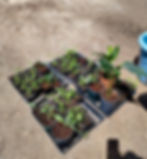
This spring also brought a small victory of my own.
I sold plant starts at my friend's farm stand.
I had intentionally kept it small this year. The plan was simply to sell off my extra starts and maybe make a little room in the greenhouse.
To my surprise, I sold about two-thirds of them.
When I added everything up, I had made back exactly what I spent on seeds and potting soil for the year.
That feels like a huge win.
There's something incredibly satisfying about having your hobbies pay for themselves.
Even better, those little seedlings are now growing in gardens throughout our community. I love the thought that someone else is tending a tomato, herb, or flower that first sprouted in our greenhouse.
Gardening has a way of connecting people in unexpected ways. A plant started in one greenhouse may eventually provide food for a family across town or become part of someone else's favorite garden bed. It's a reminder that growing food and flowers is as much about community as it is about the plants themselves.
Re-imagining the Desert

Last weekend we headed east for a long weekend at our desert property.
Our high desert campsite has slowly evolved over the years, though not always comfortably.
Until recently, we had two trailers set up in an "L" shape with absolutely no shade.
Camping in the desert without shade is no joke.
When temperatures climb, shade becomes less of a luxury and more of a necessity.
Thankfully, change has arrived there too.
One of my partner's cousins recently purchased the neighboring property, complete with three abandoned trailers that had apparently sat untouched for nearly thirty years.
This cousin hired my partner to remove them and do whatever he wanted with them.
After taking a closer look, we realized two of them were worth saving.
One has a fantastic chassis but far too much water damage to restore as a trailer. Instead, it will become a car hauler more suitable for all of the vehicles my partner would like to haul.
One of my partner's children has already claimed the old bunkbed trailer as a future project.
The other trailer, with its two doors, will become a bunk house and indoor kitchen and gathering space.
We also have an extra portable garage and leftover metal roofing from a barn reroofing project that will become an outdoor kitchen and hangout area.
With all of these structures combined, we now have six buildings to work with.
After much discussion, we decided to arrange everything in a large "U" shape along the end of our gravel pad.
And finally—
Shade.
Wonderful, much-needed shade.
Planting Hope in the Desert

With shade on our minds, we've also been thinking about trees.
Last October, we planted several on the property.
I know what you're thinking.
Planting trees in the desert sounds a little ridiculous.
Planting trees in the desert when you're only there occasionally and have no permanent water source sounds even more unrealistic.
And honestly, you're not entirely wrong.
But we need this.
The climate is changing, and if we want different outcomes in the future, we have to be willing to try different things now.
My hope is to slowly increase habitat and encourage more wildlife to use and move through our property. More animals often lead to healthier ecosystems, and healthier ecosystems are better at holding and cycling water.
Without water, our trees don't stand a chance.
So, we're experimenting.
And so far, we have survivors.
A few willow-poplar hybrids.
A couple of arborvitaes.
An oak.
A pie cherry.
Each one feels like a small act of optimism.
Maybe not every tree will make it. But perhaps a few will. Perhaps they will cast shade one day for future generations of our family. Perhaps they'll provide shelter for birds or food for insects. Sometimes hope looks like planting something that you may never fully benefit from yourself.
Building Our Little Town

We also have another new resident.
A mama European Starling has decided that the air conditioner of one of the trailers is the perfect place to raise her family.
She successfully raised a whole brood of babies this spring and continues to return to her unusual little home.
After the trailers are refinished, our next project is to build decks.
But not just any decks.
We've decided that the only appropriate thing to do is build our own little Old West town.
Boardwalk-style decks.
Storefront facades.
Awnings.
A tiny desert town built slowly, one project at a time.
Like so many things in life, it all started with cleaning and organizing.
Making room.
A Season of Making Room
And now, in those newly cleared spaces—in the gardens, the garage, and even the desert—something entirely new is beginning to take shape.
It is easy to think of cleaning and organizing as simple chores, tasks to cross off a list before moving on to something more important. But this season has reminded me that making space is often the important thing. Before new ideas can take root, before projects can move forward, and before healing can happen, there has to be room for them.
The garden has taught me that lesson once again. By pulling weeds and paying closer attention, I have started to see not only what is thriving, but what is missing. The same has been true in other parts of life. As old projects are completed, forgotten corners are uncovered, and plans begin to take shape, new possibilities emerge.
Whether it is a century-old lathe finding a new home, seedlings making their way into gardens throughout the community, or a collection of weathered trailers being transformed into a gathering place in the desert, each project represents something more than the work itself. They are reminders that growth rarely happens all at once. It happens gradually, one small step at a time.
As we move further into the season, I find myself feeling grateful for the opportunity to build, plant, restore, and imagine. There is still plenty of work ahead, but for the first time in a while, it feels less like a list of things to do and more like a collection of possibilities waiting to unfold.
For now, that feels like enough.
One shelf cleared. One project finished. One tree planted. One new idea.
Sometimes that is how the most meaningful transformations begin.